
Amsterdam and the road to Leiden
England · Amsterdam · Leiden · Delfshaven
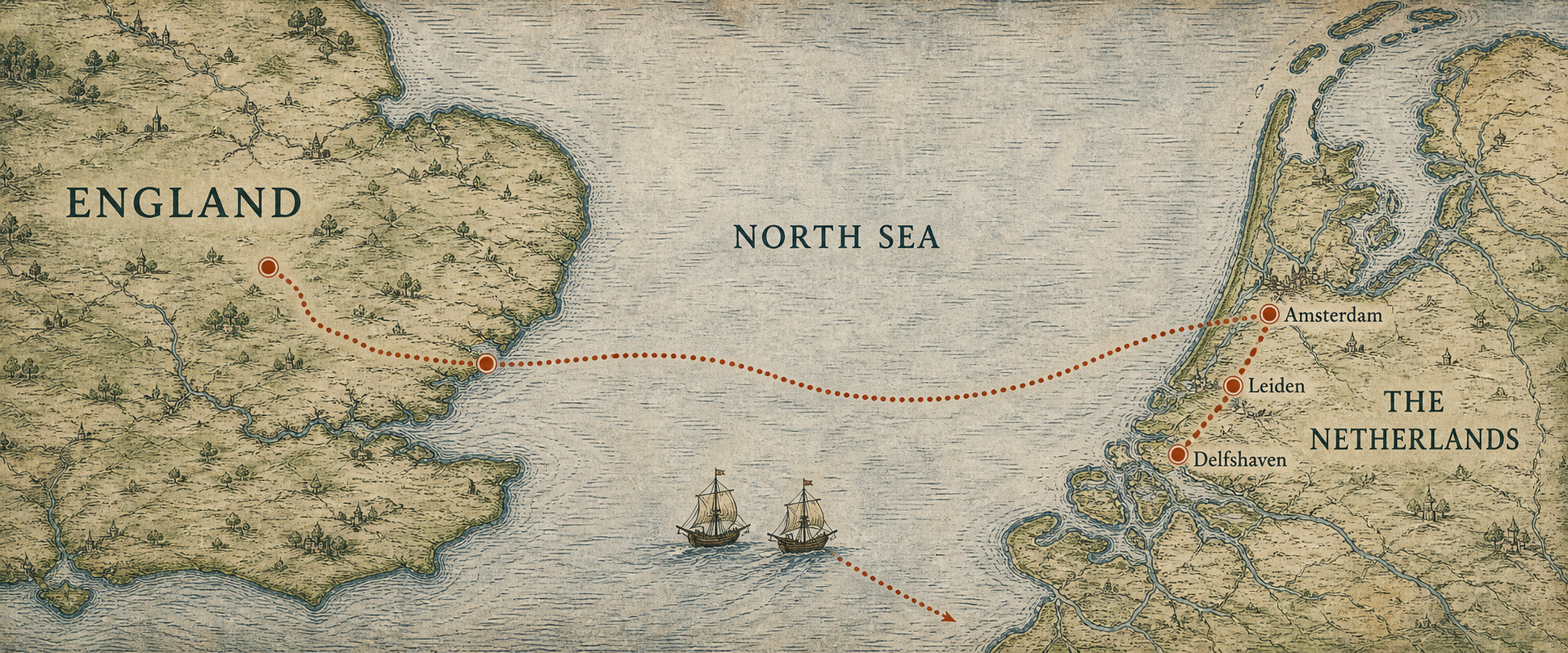 Artistic impression
Why Amsterdam comes first in this story
Before the Leiden years
A congregation's first, difficult year in exile
The English Separatists who would later settle in Leiden first tried to leave England in 1607, attempting to sail from Boston, Lincolnshire. That attempt failed: the group was betrayed, arrested, and briefly imprisoned. A second attempt the following spring, from the Lincolnshire coast near Immingham, succeeded for most of the congregation, though not without further hardship — some members, including women and children, were separated from the group and had to make their own way across later in 1608.
Amsterdam, not Leiden, was their first destination. A community of English Separatist exiles already existed there, known as the Ancient Church, led by Francis Johnson. The Scrooby group, including William Brewster and William Bradford, worshipped alongside them for about a year. Their own pastor, Richard Clyfton, chose to stay with the Ancient Church in Amsterdam rather than move on; John Robinson took over leadership of the group that continued to Leiden.
By 1609 the congregation had left Amsterdam for Leiden. The Ancient Church itself was troubled at the time by internal disputes, and Leiden offered steadier prospects — work in the textile trade and, eventually, citizenship. Robinson's congregation registered with the city authorities there in May 1609.
Amsterdam today has no dedicated Pilgrim museum or heritage trail comparable to Leiden's — the congregation's stay was short, and it is Leiden that holds the church, house and archive records connected to specific named individuals. The map and photograph below give a sense of the city they passed through on the way to the records that this site documents.
Amsterdam then and now
Amsterdam in the years before the Pilgrims settled in Leiden
The 1544 bird's-eye map shows the compact city the congregation would have known; the modern Herengracht shows how much of that canal character is still visible today.
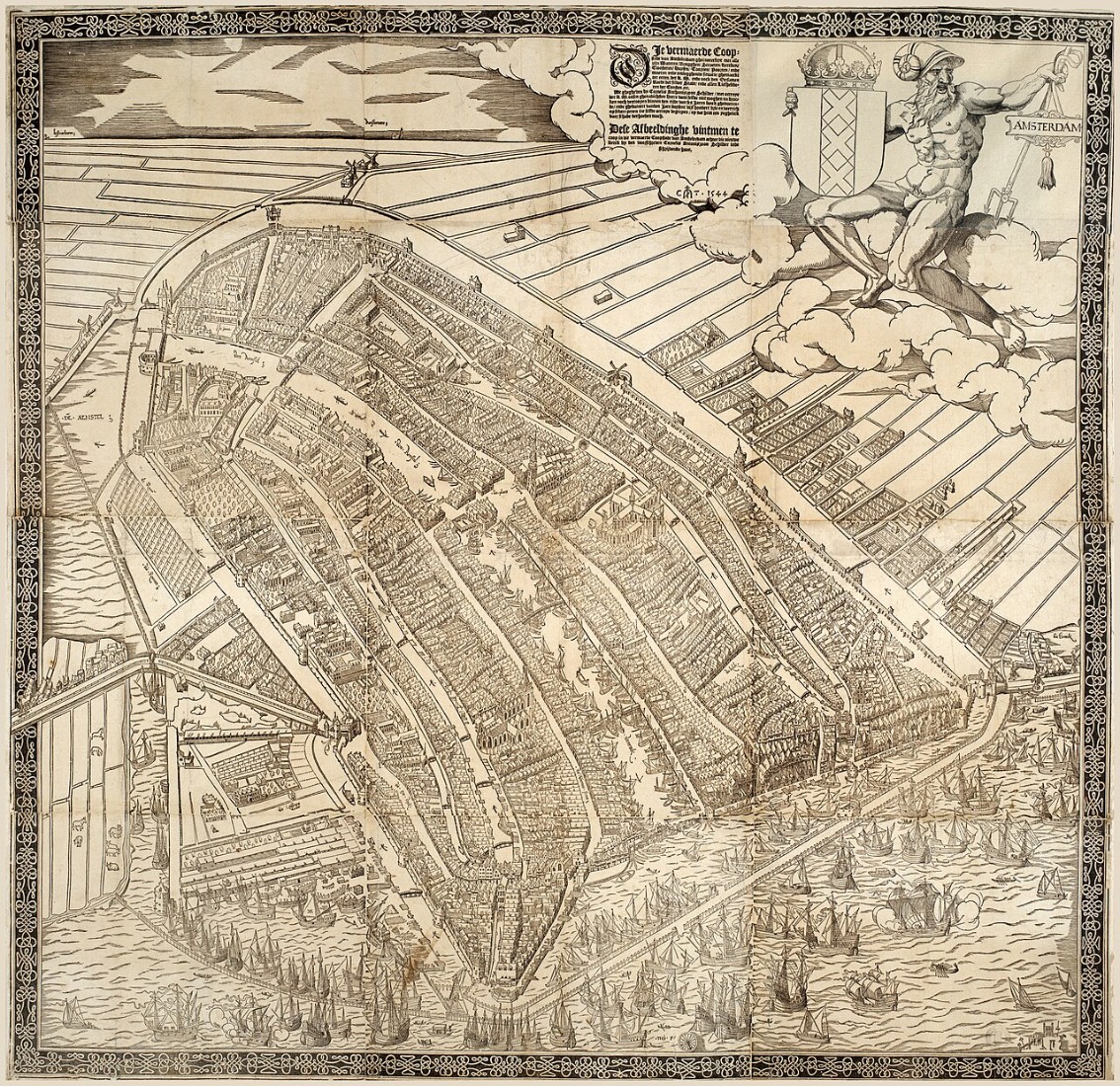
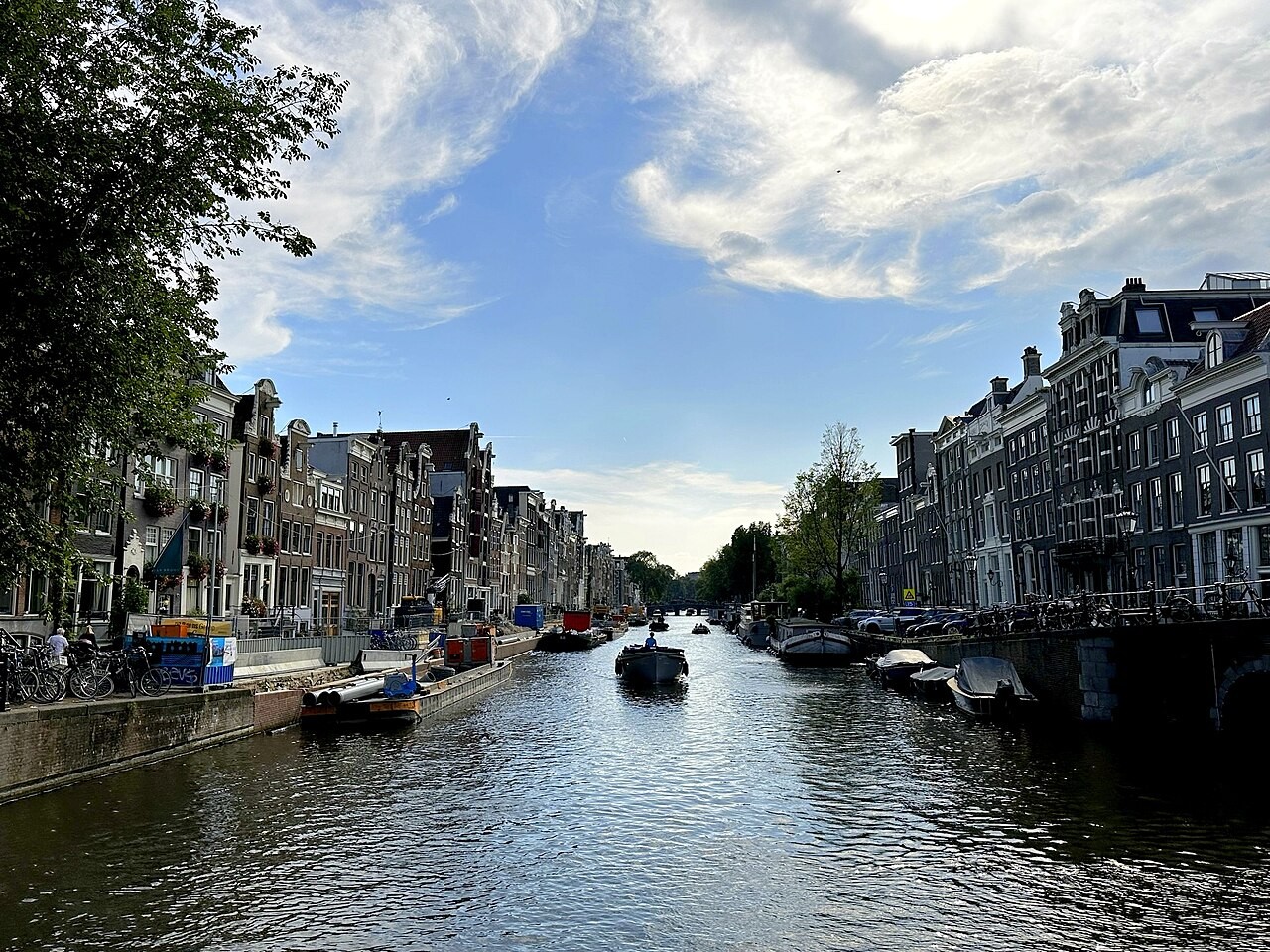
Historic Amsterdam
The map gives visitors a present-day frame of reference. Family claims remain tied to the archival record, not to proximity alone.

Genealogical research in Dutch archives
Need help with your own Dutch family history?
Radicae offers genealogical research services for family historians working with Dutch records, including family tree research, archive research and translation of Dutch records. Personal tours in the Netherlands and one-on-one consultations on genealogy and DNA research are also available.
Get in touch