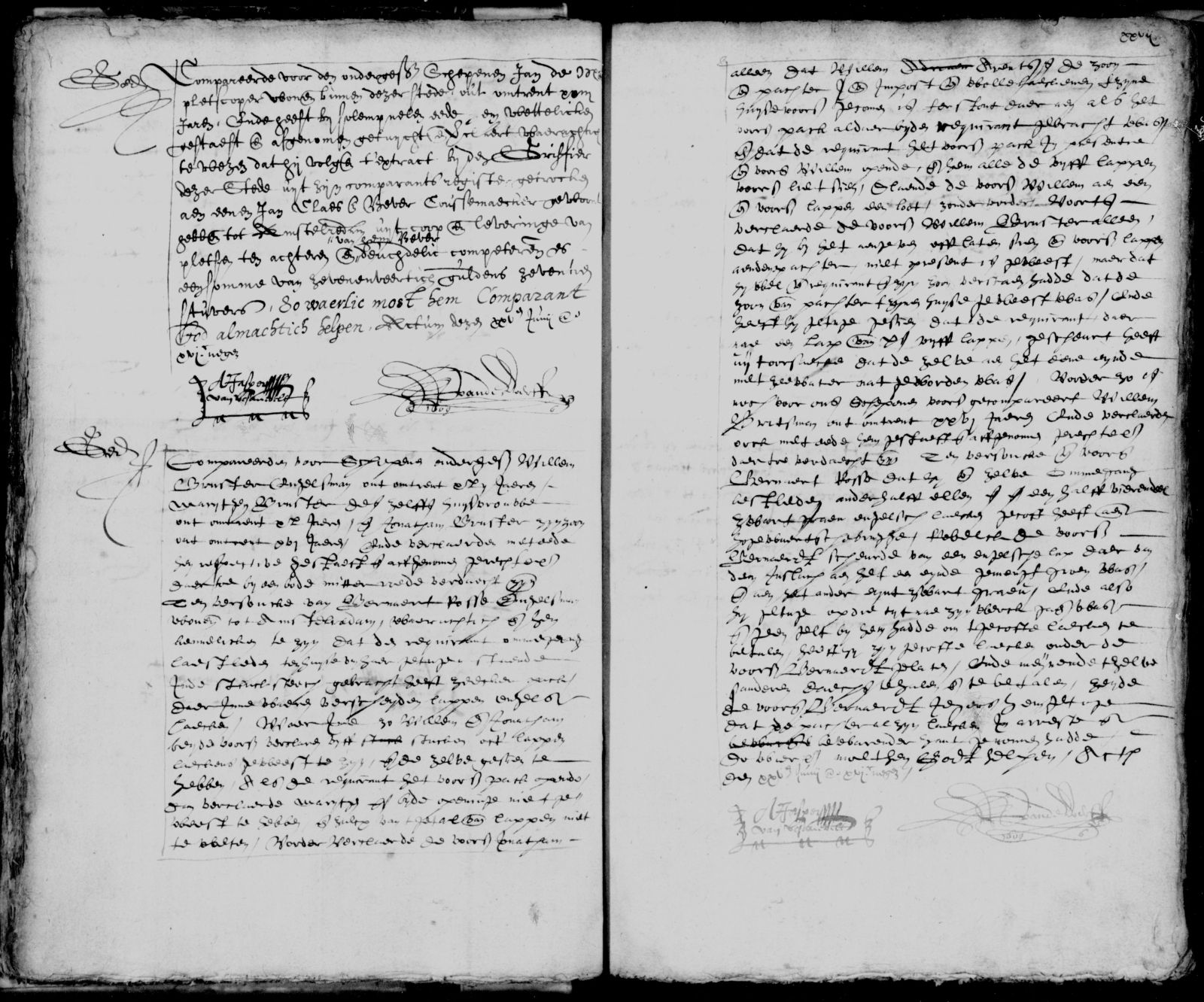
Before the undersigned aldermen appeared William Brewster, Englishman, aged about 42 years; Mary Brewster, his wife, aged about 40; and Jonathan Brewster, his son, aged about 16. Lawfully summoned at the request of Bernard Ross, an Englishman living in Amsterdam, they declared under oath that during the most recent militia review Ross brought a package to their house in the Stinksteeg containing pieces of English cloth.
William and Jonathan declared that the package contained five pieces and that they saw them when Ross opened it. Mary declared that she was not present when it was opened and therefore did not know the number. Jonathan further declared that Willem Arentsz, son of the farmer of the woollen-cloth excise, came to their house immediately after the package arrived. Ross opened it in Willem's presence and showed him all five pieces; Willem attached a lead seal to only one.
William declared that he was not present when the pieces were declared or shown to the excise farmer, but had heard from Ross and his son that the farmer's son had been at his house. He later saw Ross tear one of the five pieces because one end had become wet with seawater.
William Bridgeman, aged about 26, also appeared. He declared under oath that during the recent militia review he bought one and a half ells and half a quarter of black-grey English cloth from Ross at the Hogewoerd bridge. Ross tore it from an English piece whose weft was mixed green at one end and black-grey at the other. Bridgeman was on his way to work and had no money with him, so he left the cloth with Ross, intending to collect and pay for it the next day. Ross then told him that the excise farmer had seized all his cloth. So truly help them God. Done 25 June 1609.
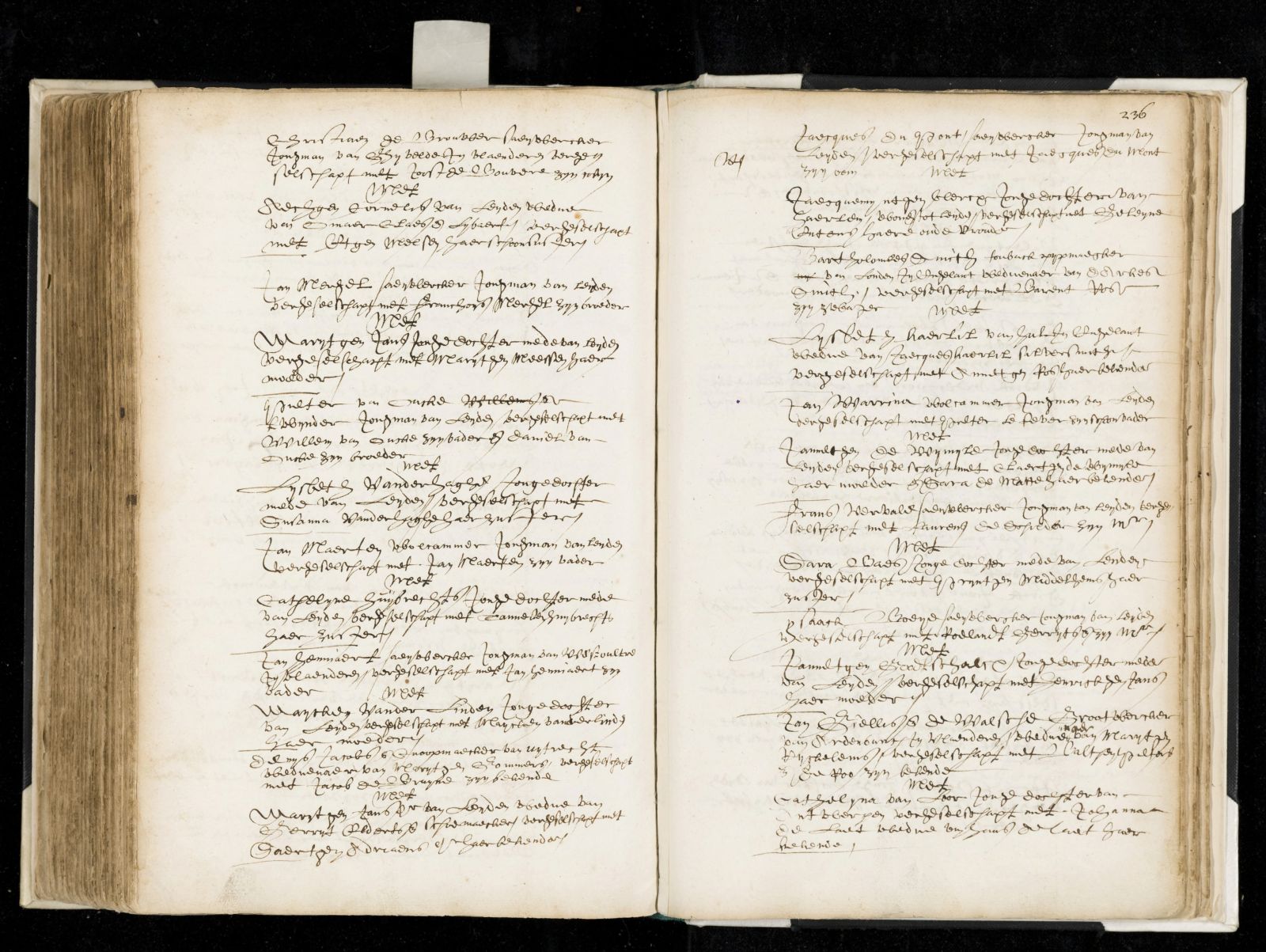
Translation by Radicae, The Leiden Connection, from the Dutch transcription supplied by Erfgoed Leiden.