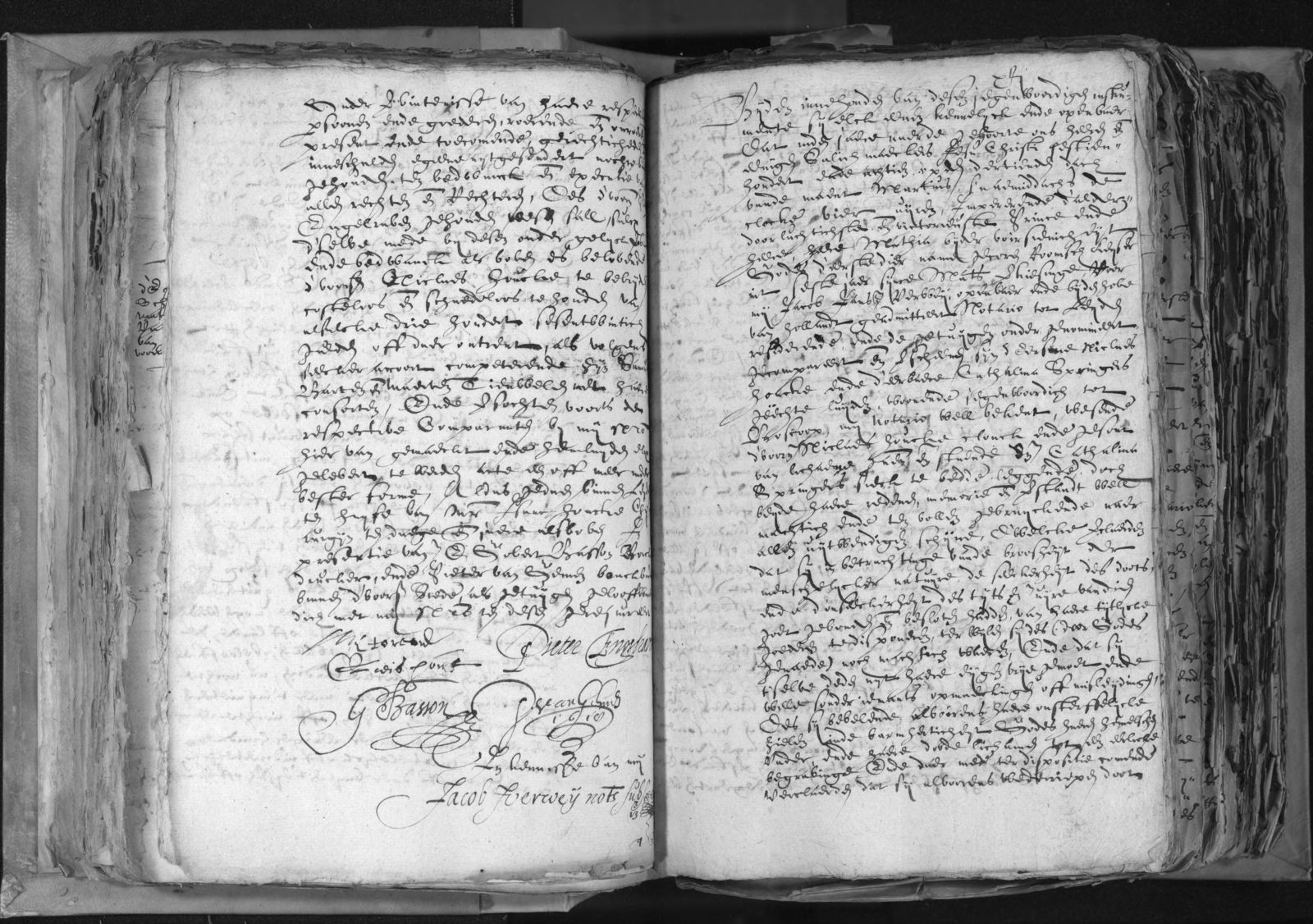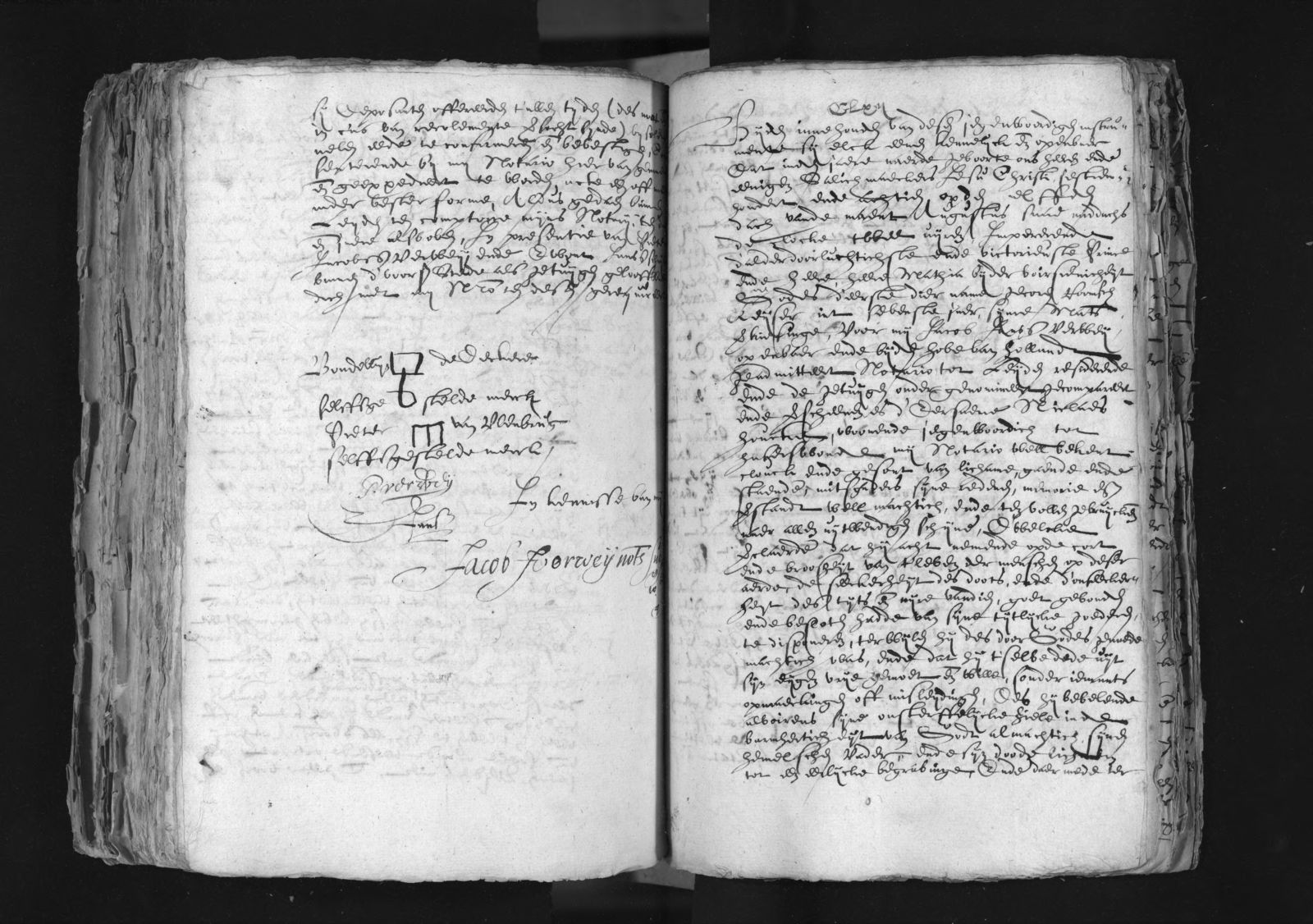
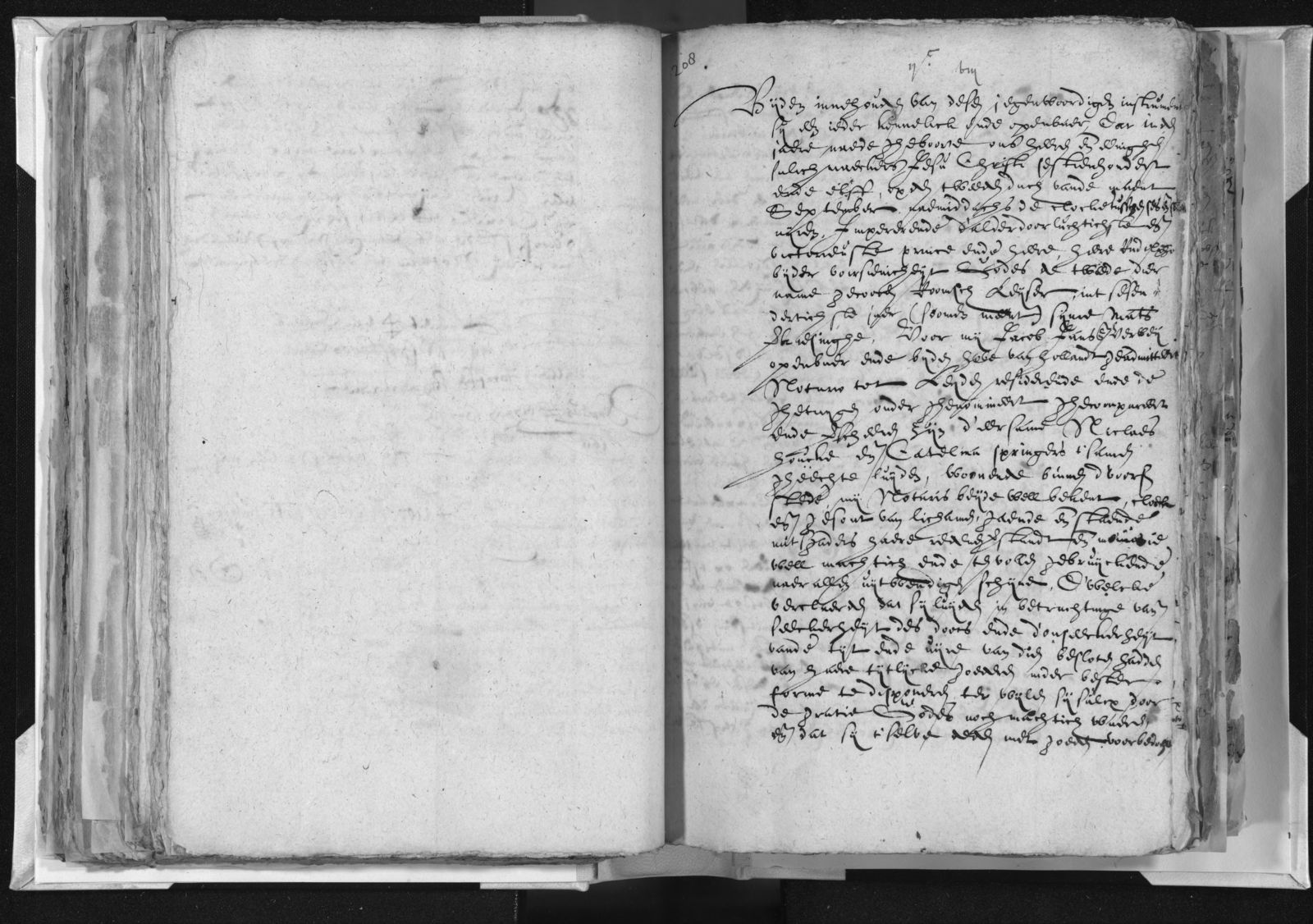
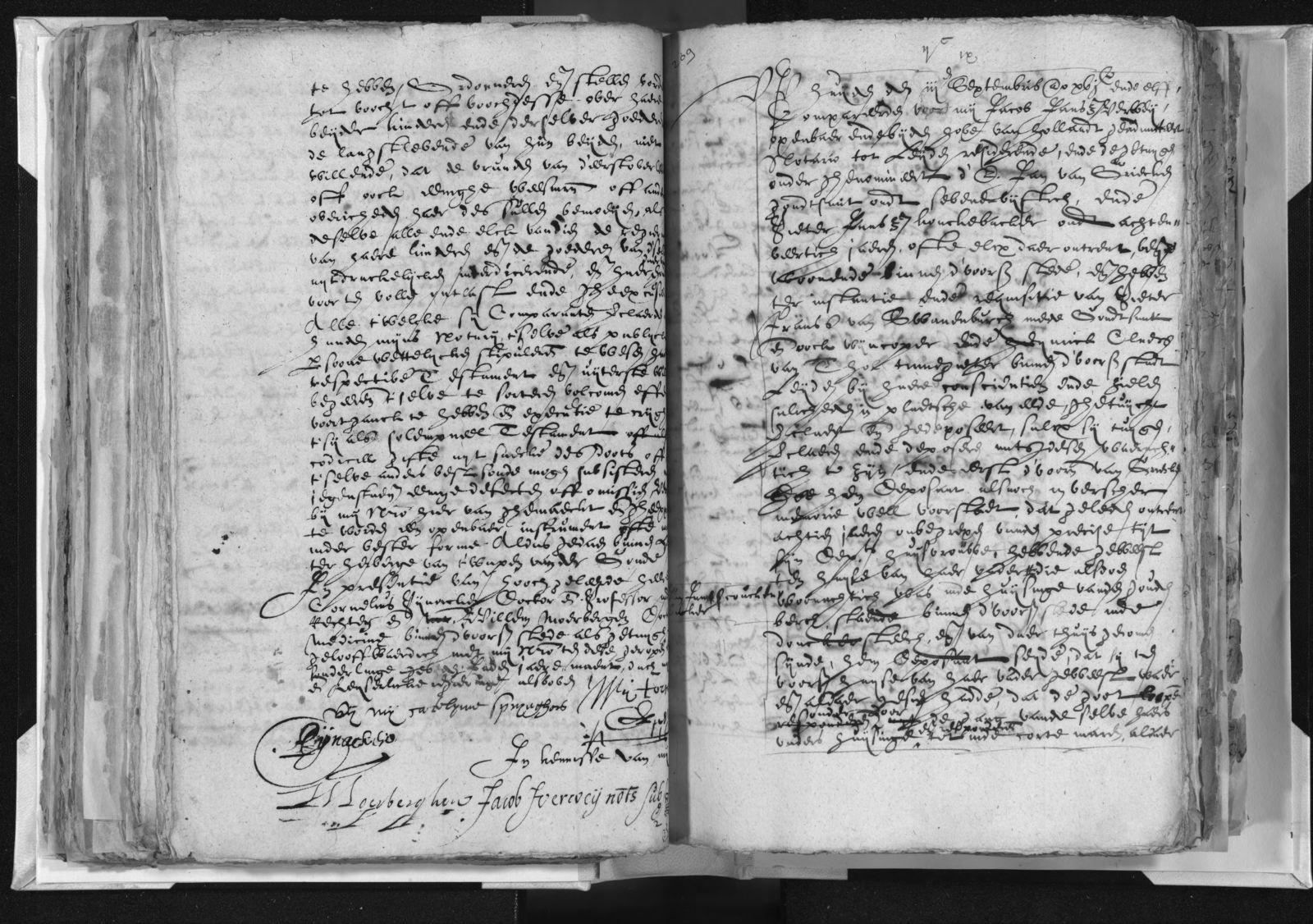
By the contents of this present instrument, let it be known and made public to everyone, that in the year after the birth of our Lord and only Saviour Jesus Christ one thousand six hundred and eleven, on the second day of the month of September, in the afternoon between six and seven o'clock, during the reign of the most illustrious and victorious prince and lord, Lord Rudolph, by the providence of God the second of that name elected Roman Emperor, in the thirty-sixth year (as is reckoned) of his Majesty's election, before me, Jacob Janszoon Verweij, notary public admitted by the Court of Holland, residing at Leiden, and the witnesses named below, there appeared the honourable Niclaes Houcke and Catelina Springers, husband and wife together, living within the aforesaid city, both well known to me, the notary, sound and healthy in body, able to walk and stand, and likewise in full possession and use of their reason, understanding and memory, according to all outward appearance.
Who declared that, in consideration of the certainty of death and the uncertainty of its time and hour, they had resolved to dispose of their temporal goods in the best form while, by the grace of God, they were still able to do so, and that they did this with good and premeditated counsel and of their own free mind and will, without anyone's contrivance or deception; whereupon they first commended their immortal souls to the mercy of God and their dead bodies to Christian burial, and, proceeding to the disposition, declared that they revoked, annulled and voided any and all testaments, codicils and other dispositions which might be found to have been made by them, either jointly or individually, prior to this one, not wishing that these should have any effect or force, holding them for null, void and of no value, and disposing anew.
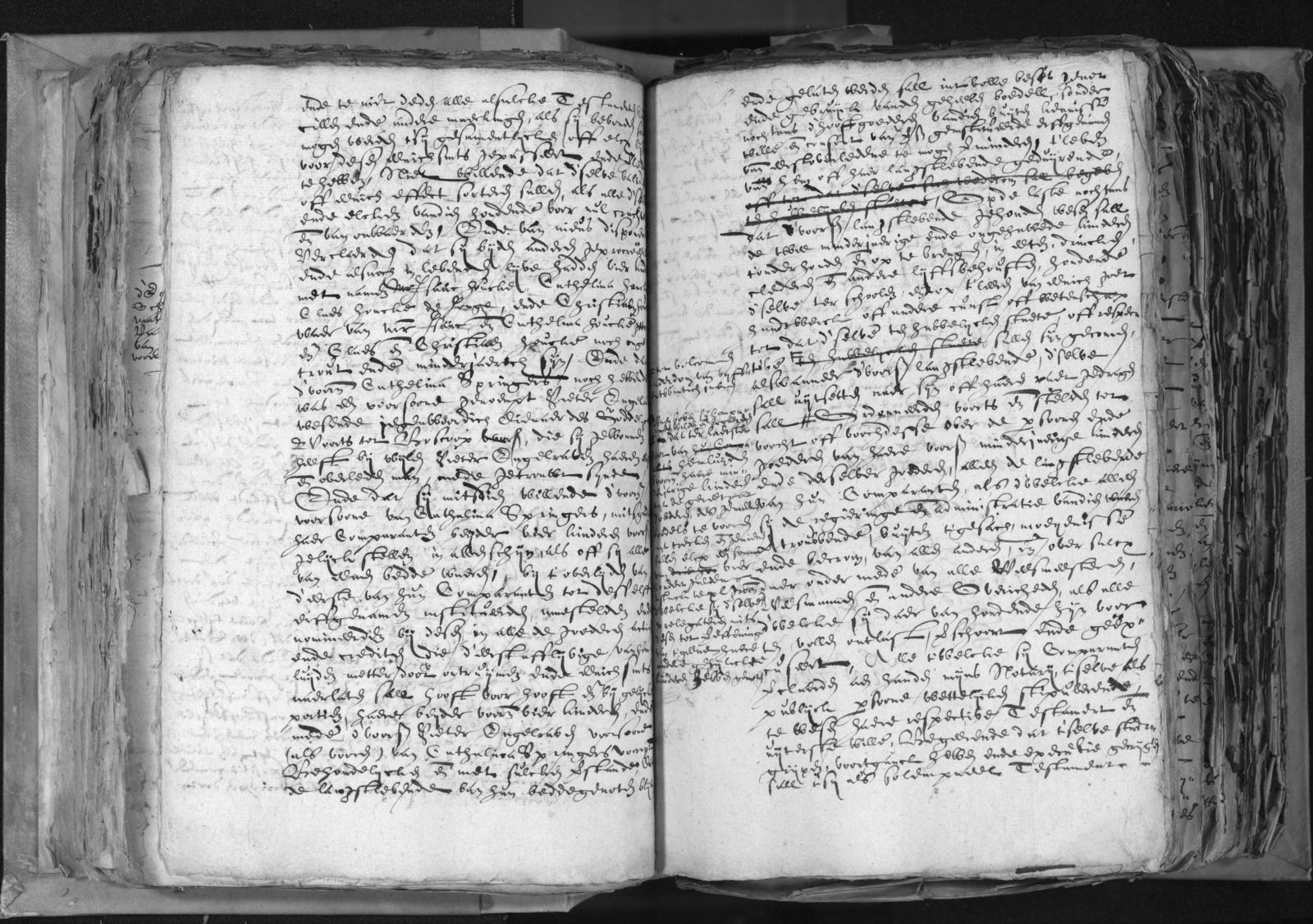
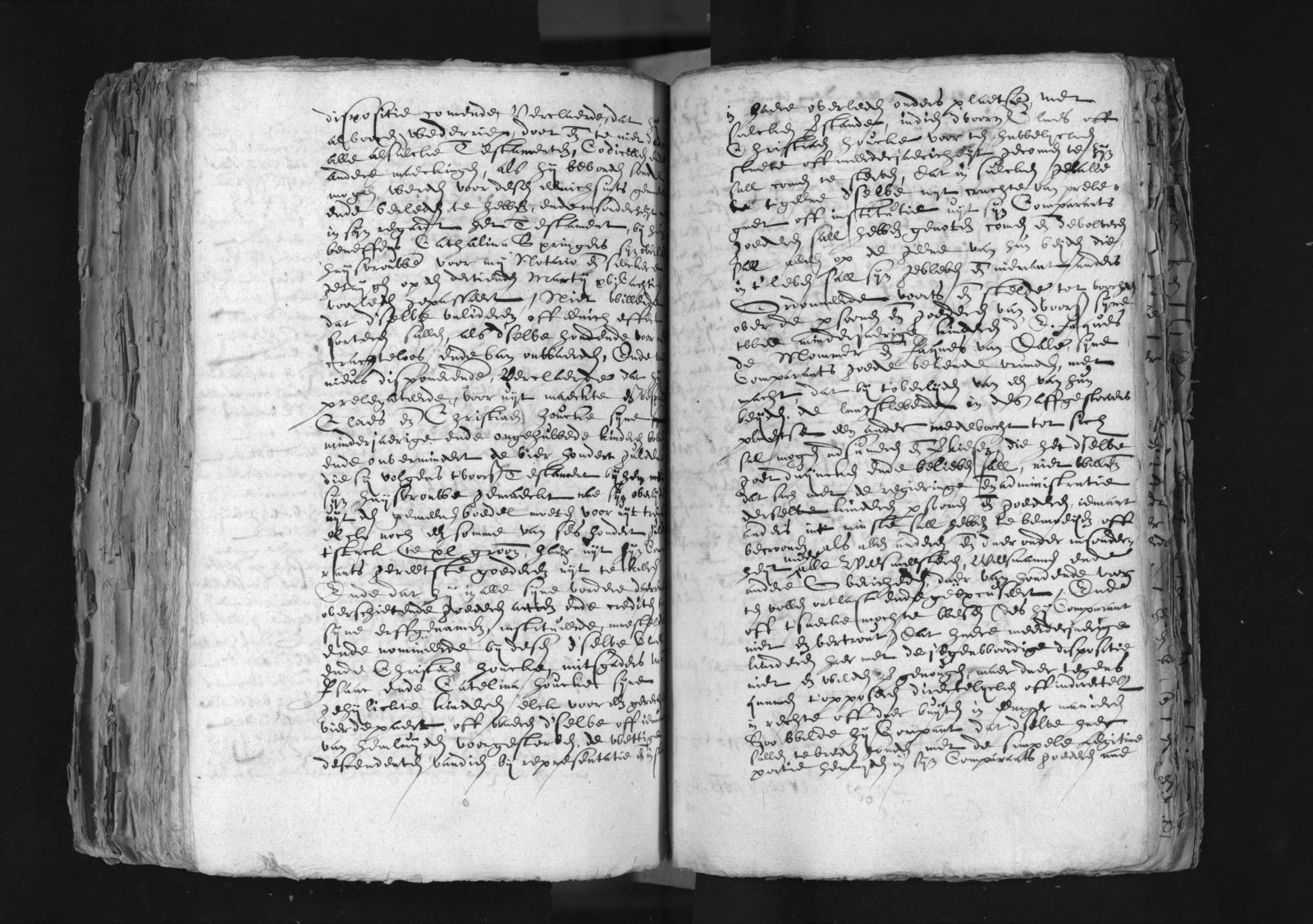
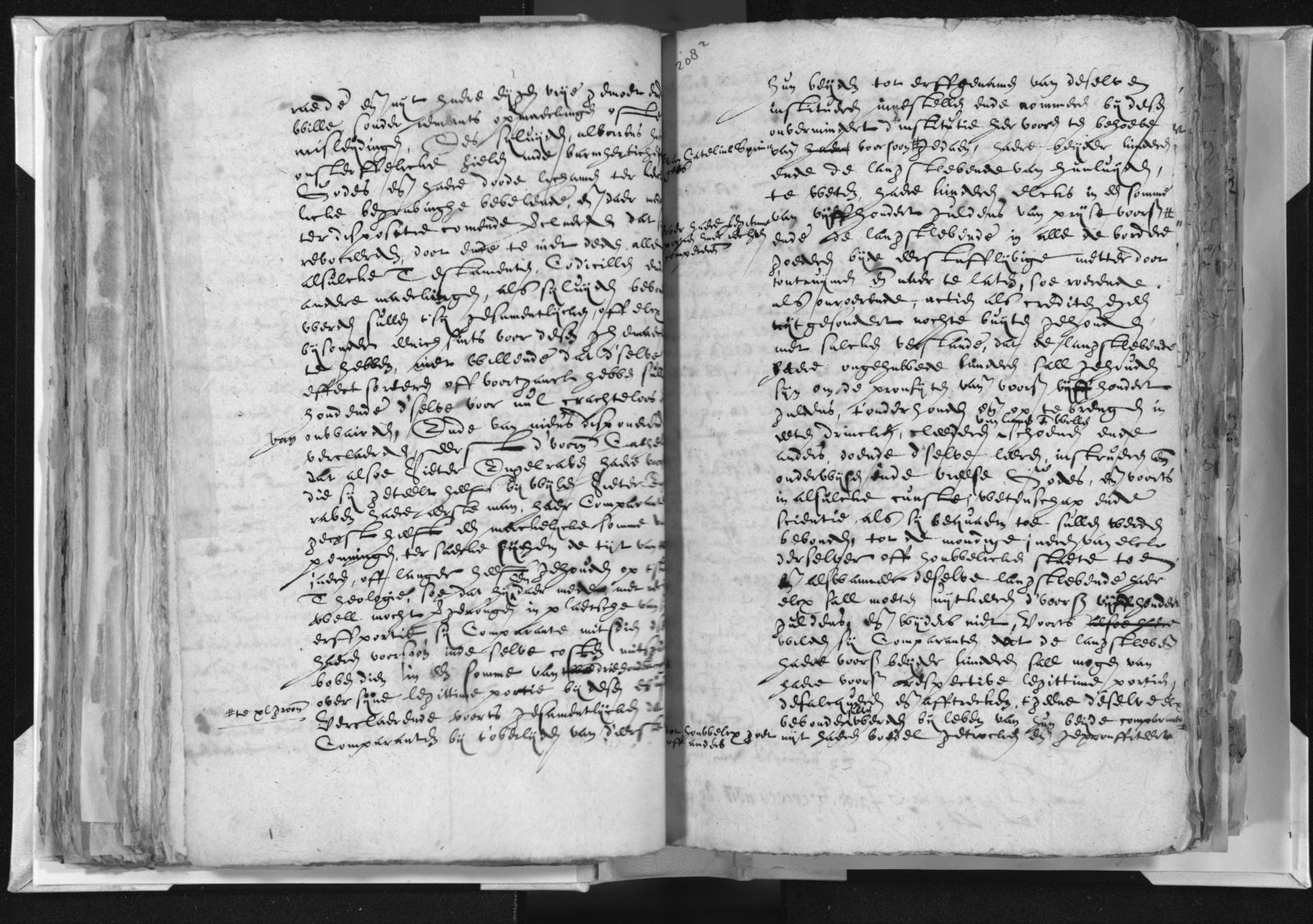
They declared, first the aforenamed Cathelina, that since Pieter Engelraven, her son from a previous marriage, whom she bore by the late Pieter Engelraven, her first husband, has cost her, the appearing party, a considerable sum of [the amount is left blank / illegible in the original transcription] guilders, in that she maintained him for the space of twelve years, or longer, in the study of theology, so that he may rightly content himself with that in place of his portion of the inheritance, she, the appearing party, hereby excludes this same son of hers, on account of these same costs, and moreover a sum of three hundred Carolus guilders of 40 groot each, from his legitimate portion.
The appearing parties further jointly declared that, upon the death of the first of them to die, they institute, appoint and name as their heirs, by this present, without prejudice to the institution made above in favour of the son of Cateline Springers, their children by both of them and the survivor of the two of them, namely: their children, each for a sum of five hundred guilders of the aforesaid value, for their legitimate portions to which they are entitled, and the survivor for all the remaining goods which the one who dies first shall leave and vacate at death, both movable and immovable, claims and credits, none excepted or held back; with the understanding that the survivor shall be bound to maintain and bring up their unmarried children on the proceeds of the aforesaid five hundred guilders, [providing them] with food, drink, clothing of linen and wool, shoes and other necessities, and to have them taught, instructed and educated in the fear of God, and furthermore in such arts, knowledge and learning as they shall be found fit for, until each of them comes of age or into the married state, at which time the said survivor shall be obliged to pay out to each of them the aforesaid five hundred guilders, and nothing further.
Furthermore, the appearing parties wished that the survivor should deduct from the said respective legitimate portions whatever each child shall be found to have received and profited from their estate during the lifetime of both appearing parties, whether as marriage goods or otherwise; and they further ordain and appoint as guardian or guardianess over their joint children and their goods the survivor of the two of them, not wishing that the relatives of the one who dies first, nor any orphan-masters or other authorities, should concern themselves therewith, expressly forbidding each and all of them from involving themselves in the governance of their children and their goods, and declaring them [text illegible/breaks off: "ho…"] fully discharged and excused thereof.
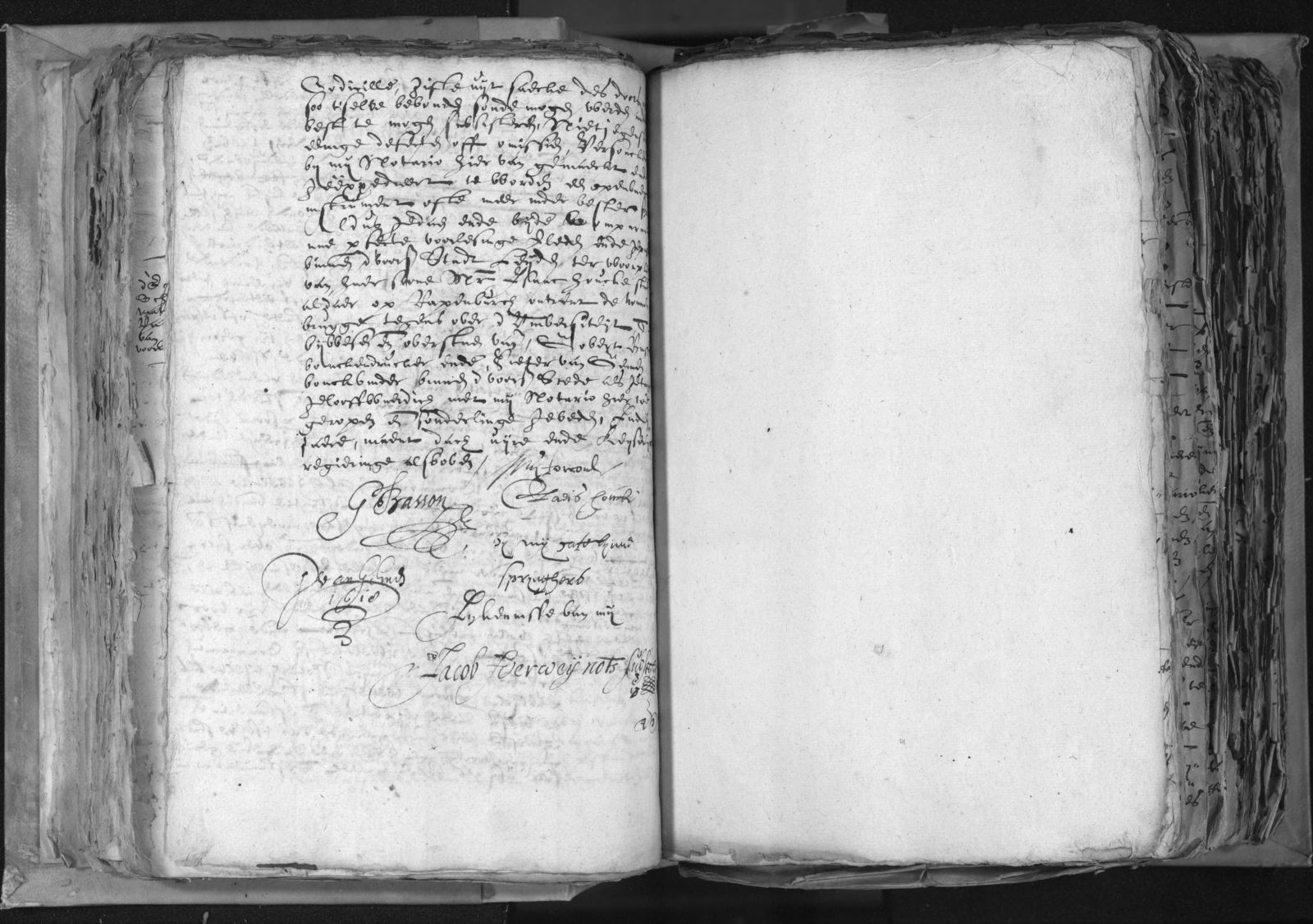
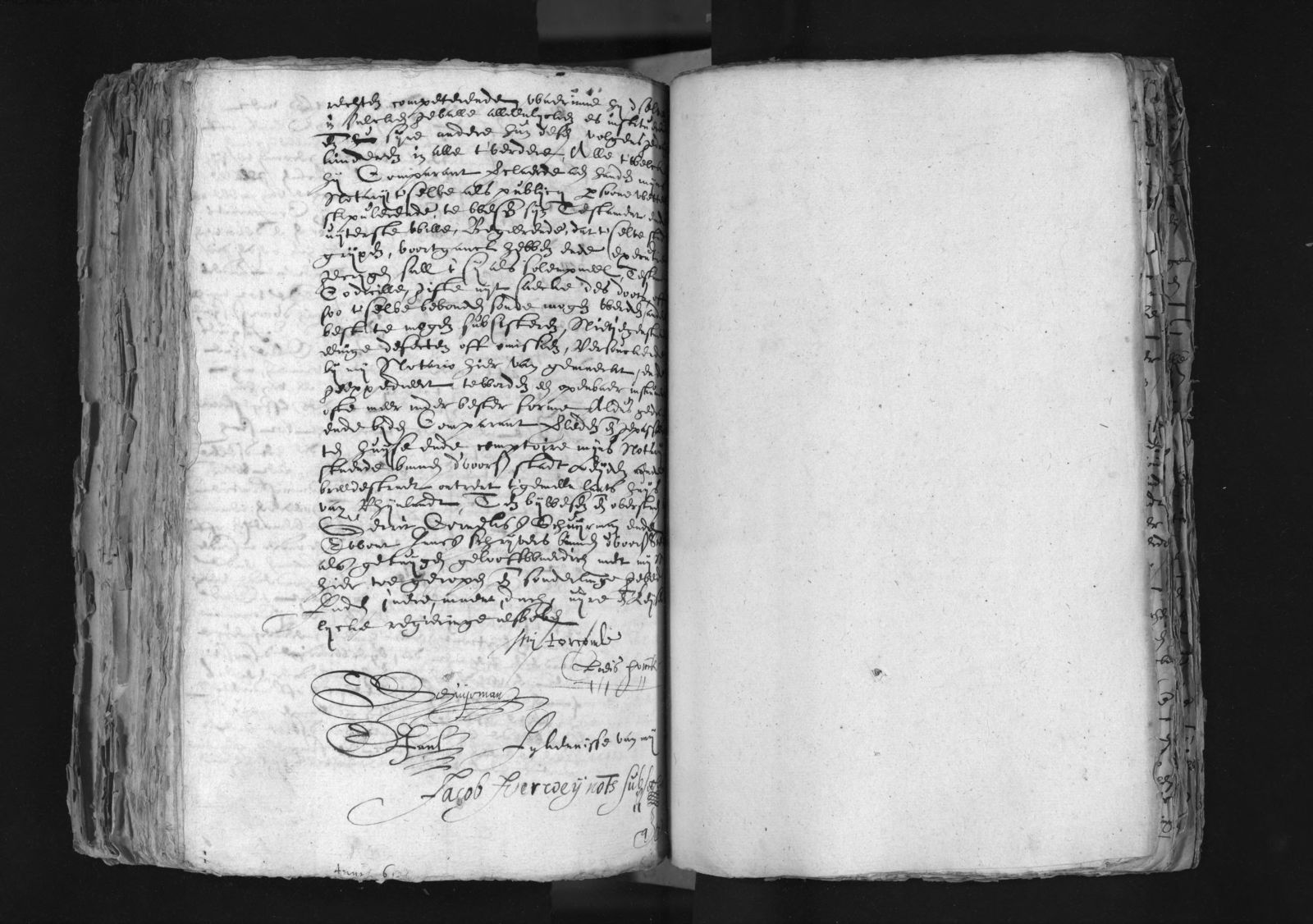
All of which the appearing parties declared, into the hands of me the notary, lawfully stipulating in my capacity as a public person, to be their respective testament and last will, desiring that it shall take complete [effect — the word is cut off in the original: "effe…"] and proceed and be executed, whether as a solemn testament, or as a codicil, or as a gift in contemplation of death, or in whatever other way it might best be upheld, notwithstanding any defects or omissions.
Requesting that a public instrument, or more than one, be drawn up and issued hereof by me, the notary, in the best form. Thus done within Leiden, at the inn of the Arms of Gouda, in the presence of the highly learned gentlemen Cornelius Pijnacker, doctor and professor of law, and Willem Moerbergen, doctor of medicine, within the aforesaid city, as trustworthy witnesses, especially called and requested hereto with me, the notary, in the year, month, day and imperial reign as above.
[Signed] By me, Catelynne Sprynghers. C. Pijnacker. In witness whereof, me, Claeis Houck. W. Moerberghen. In witness of me, Jacob J. Verwey, substitute notary, 2 September 1611.
Translation by Radicae, The Leiden Connection, from the Dutch transcription supplied by Erfgoed Leiden. Two short passages in the original are damaged or trail off (an amount left blank near "… penningen", and the words "ho…" and "effe…"); these gaps are marked above rather than guessed at.