
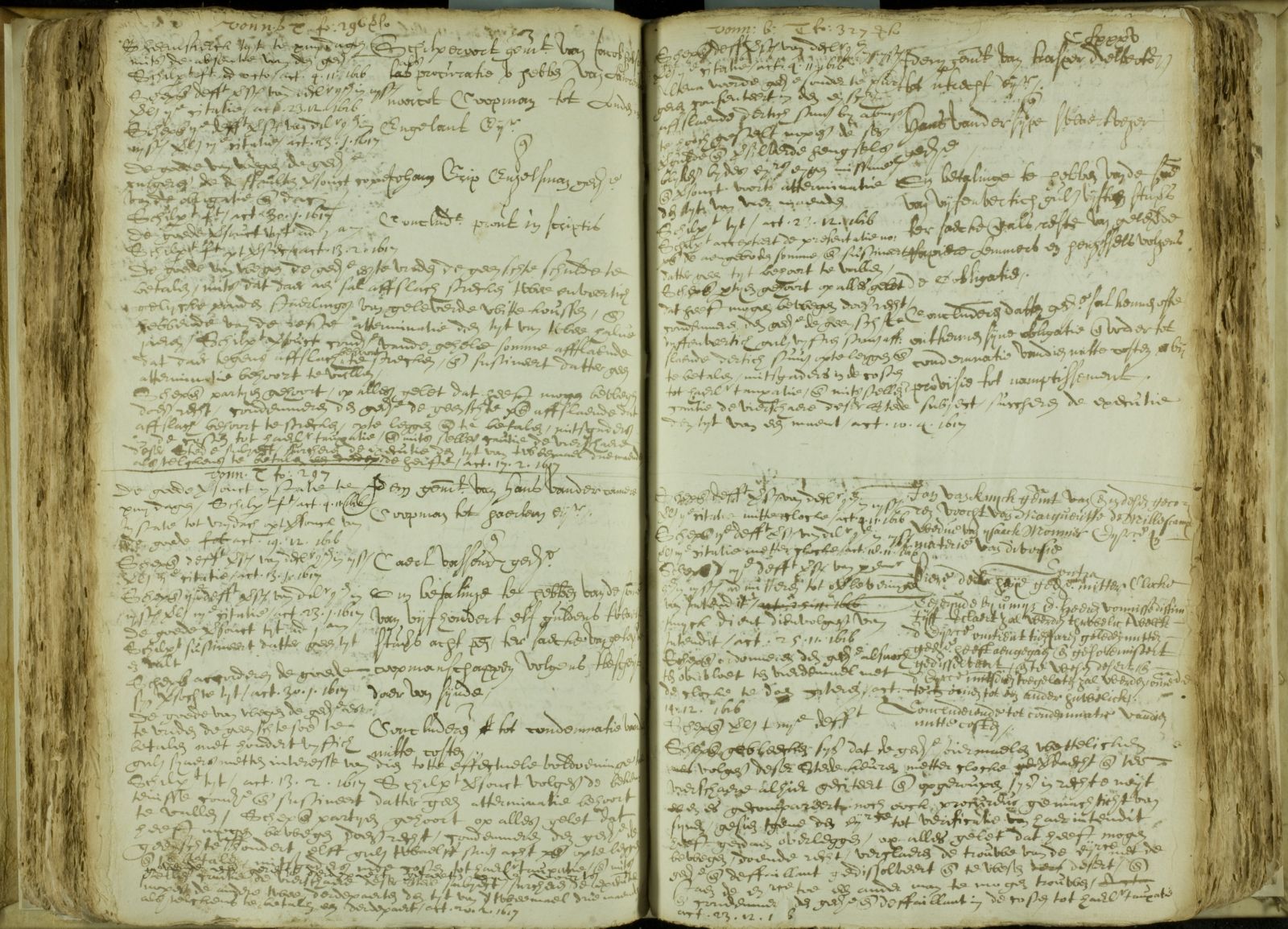
Schilperoort, authorised representative of Jacob Hobsche, having power of attorney from Laurence Naercot, merchant at London in England, plaintiff, against Johan Crip, Englishman, defendant. He moves as set out in writing.
In the margin: Judgment book T, folio 296 verso. Heemskerck, time of fourteen days on account of the defendant's absence. Schilperoort: let it be granted for eight [days]. Done 4 November 1616.
The aldermen find a first default, having regard to the declinatory plea, and condemn [the defendant] to three stuivers; they grant a second citation. Done 23 December 1616.
The aldermen find a second default, having regard to the declinatory plea, and condemn [the defendant] to three stuivers; they grant a third citation. Done 23 January 1617.
The party on behalf of the defendant, purging the defaults, requests a copy of the obligation and a day [to answer]. Schilperoort: let it be granted. Done 30 January 1617.
The party requests time until [the next session]. Schilperoort: let it be granted, upon the default. Done 13 February 1617.
The party on behalf of the defendant is content to pay the debt demanded, provided that forty-two like pounds sterling be deducted for white stockings delivered, and that he be given a term of two half-years for the remainder. Schilperoort demands condemnation for the whole sum, denying that any such deduction is due, and maintains that no term of payment ought to be allowed.
The aldermen, having heard the parties and considered everything that might move them to do justice, condemn the defendant to pay the sum demanded, denying that any deduction is due, together with the costs at their assessment; and provided he furnishes surety subject to this city's court, they suspend execution for a period of twice three months, each time to pay one half. Done 17 February 1617.
Translation by Radicae, The Leiden Connection, from the Dutch transcription supplied by Erfgoed Leiden.