
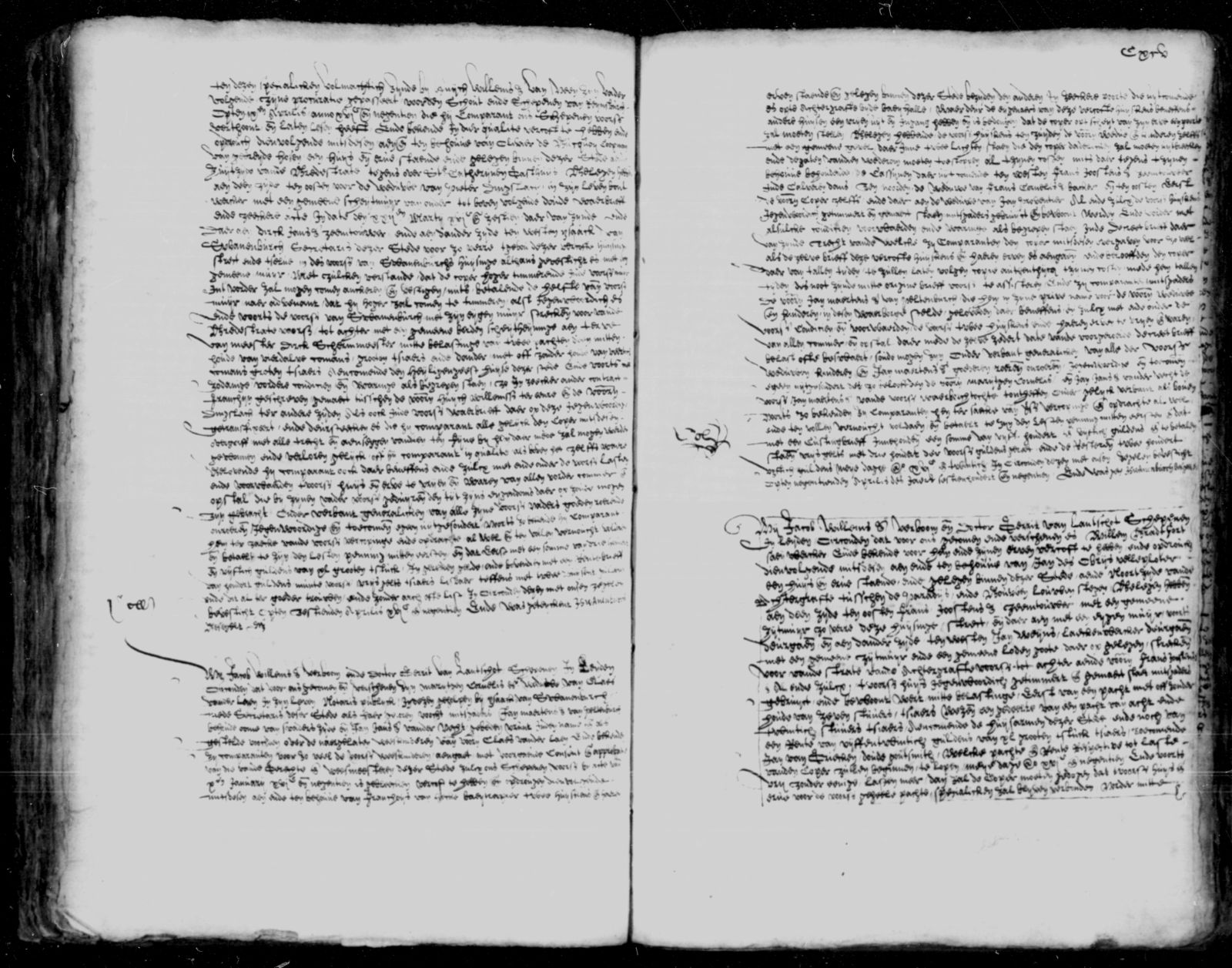
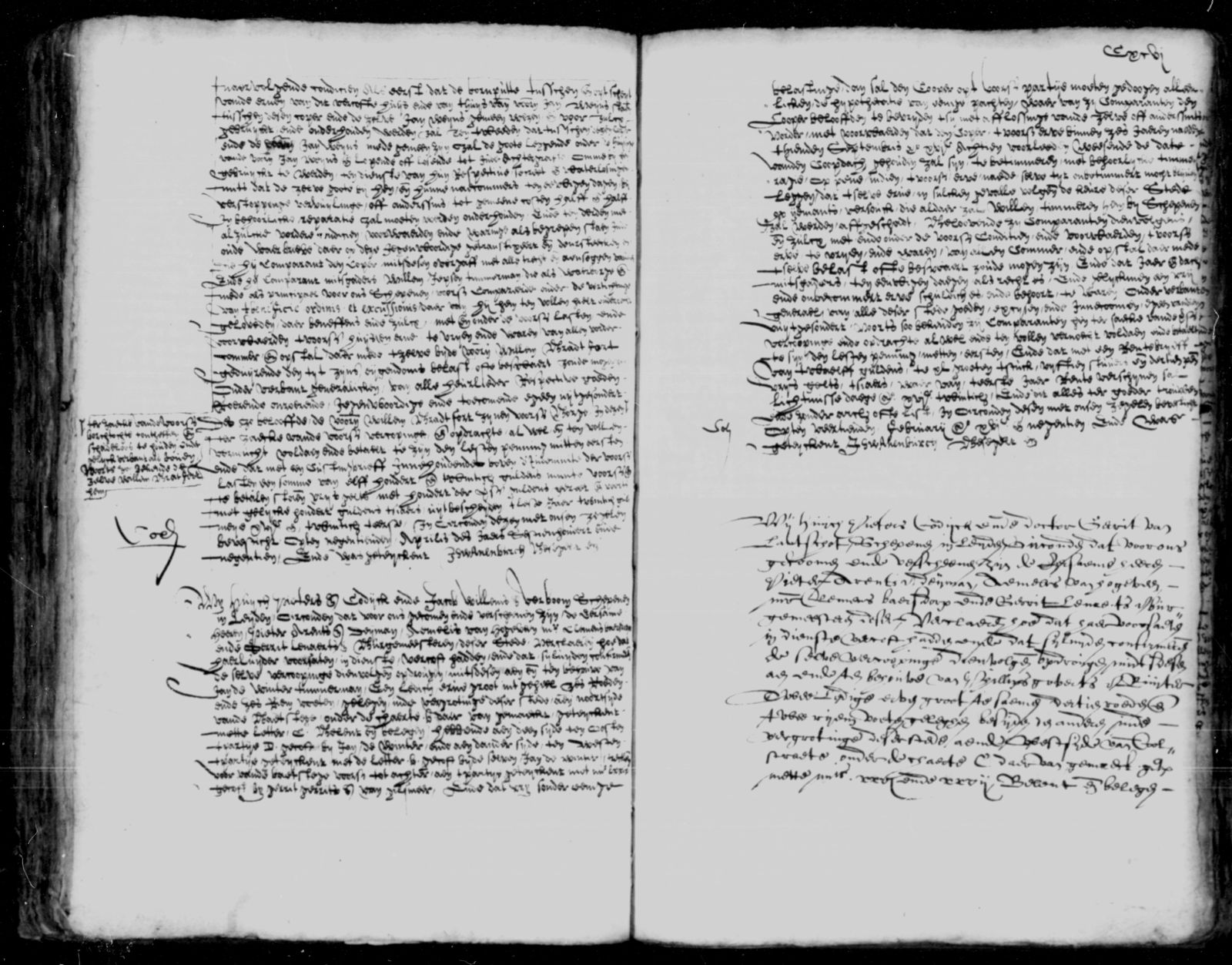
We, Jacob Willemsz Verboom and Doctor Gerrit van Lantschot, aldermen of Leiden, certify that William Bradford, serge weaver, appeared before us. For himself and his heirs he acknowledged that he had sold and conveyed to Jan des Obrys, skinner, a house and yard on the north side of the Achtergracht between the Paradijssteeg and Bouwenlouwensteeg.
On the east it adjoined Frans Joostensz, tawer, with a shared side wall for the length of the house and then Bradford's own wall. On the west it adjoined Jan Weyns, cloth worker, with a shared side wall and shared lead gutter. The property extended from the Achtergracht to Frans Joostensz and was conveyed as built, used and occupied.
The property was charged with seven stuivers annual ground rent, part of a rent of twenty-eight stuivers benefiting Leiden's poor, and with an annuity of twenty-five guilders a year payable to Jan van Griecken the elder, goldsmith. These charges passed to the buyer from 1 May 1619. The whole property remained specially liable for the full ground rent.
The well on the boundary between this house and Jan Weyns's house was to remain common and be used and maintained jointly. The drain beneath Weyns's house running to the Achtergracht, used for privy and waste water, was likewise common and had to be repaired and cleaned by both owners and their successors at equal cost. The further conditions of the earlier deed attached to this instrument remained in force.
Bradford and William Jepson, carpenter, who appeared as surety and principal debtor after waiving the legal benefits of order and execution, promised to warrant the property against every further charge placed on it during Bradford's ownership. They pledged all their present and future movable and immovable goods, and Bradford promised to keep Jepson free from loss.
Bradford acknowledged full satisfaction for the sale by a mortgage deed for 1,120 guilders, besides the stated charges: 100 guilders payable immediately, then 100 guilders each year, with twenty guilders in the final year, beginning in May 1620. Confirmed with our seals on 19 April 1619. Signed J. Swanenburch and sealed.
Translation by Radicae, The Leiden Connection, from the Dutch transcription supplied by Erfgoed Leiden.