
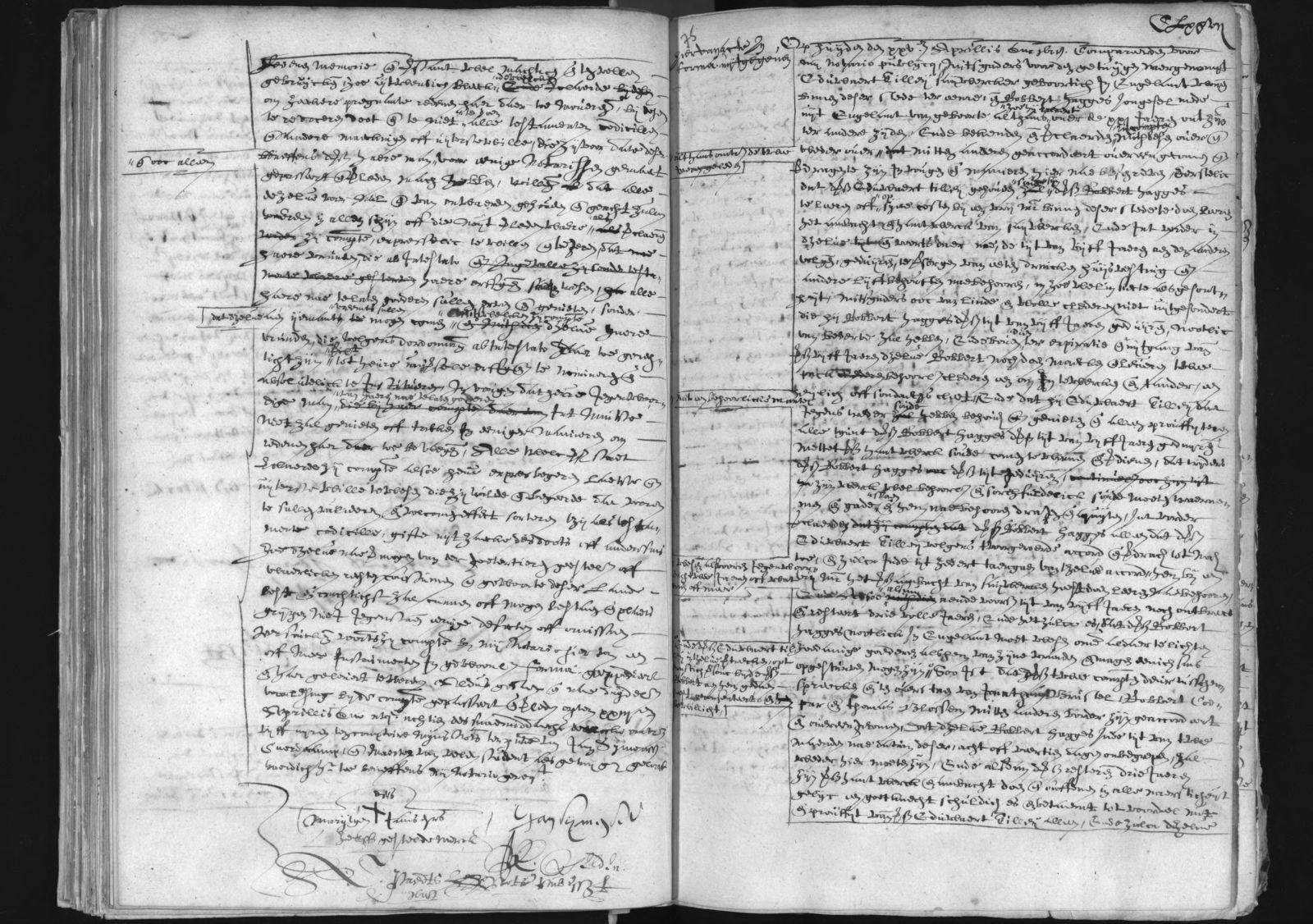
On this 25th day of April 1618, before me, notary public, and the witnesses named below, appeared Edward Tilley, serge weaver, born in England, living within this city, on the one part, and Robert Hagges, bachelor, likewise born in England and, as he declares, presently above the age of twenty-one years, on the other part.
The appearers acknowledged and declared that, about two years earlier, they had mutually agreed and arranged matters between themselves as follows: first, that the said Edward Tilley shall be obliged to teach the said Robert Hagges, or have him taught at his own expense by a free master within this city, the trade and craft of serge-weaving, and, during that time and for five years thereafter, to provide him with food, drink, lodging and other necessities of life as is proper, in both sickness and health, as well as with linen and woollen clothing — nothing excluded — which Robert Hagges shall need over the said term of five years…
The original document breaks off at this point — the remainder of this clause, describing the outfit and cloak promised at the end of the five years and the two-month return to England mentioned in the archive abstract, was not preserved in the surviving transcription.
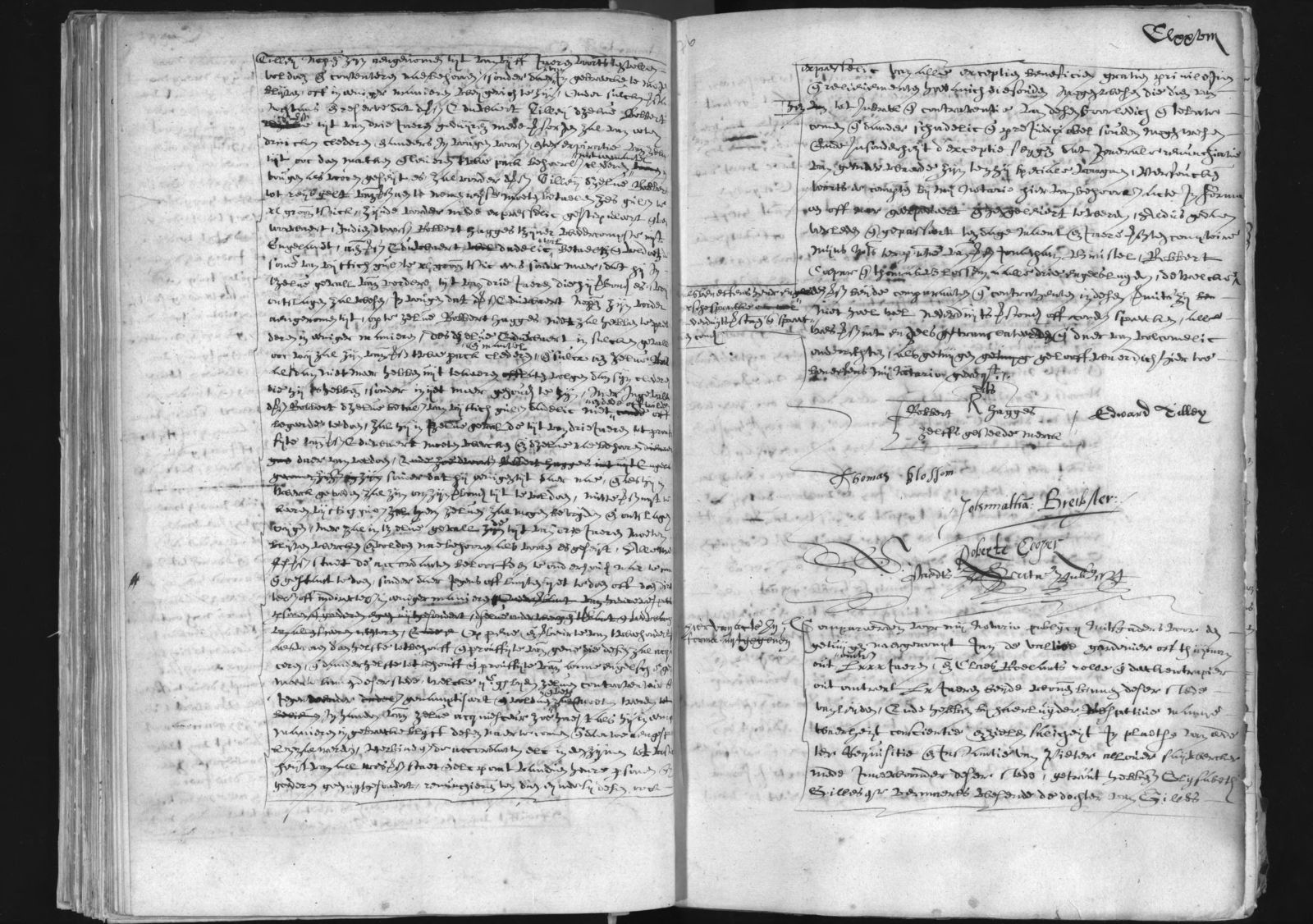
Thus done, executed and passed on the day, month and year aforesaid, at the office of me, the notary, in the presence of the aforesaid Jonathan Brewster, Robert Cooper and Thomas Blossom, all three Englishmen who, besides their own English tongue, could also understand and speak Dutch well, and who informed and fully explained all of the foregoing in English to the said appearers and contracting parties, since they did not understand or speak Dutch very well — as credible witnesses requested, called upon and asked for this purpose alongside me, the notary.
(Signed) This is R [his mark], Edward Tilley; Robert Hagges, his own mark set; Thomas Blossom; Jonathan Brewster; Robert Cooper; Paedts.
Translation by Radicae, The Leiden Connection, from the Dutch transcription supplied by Erfgoed Leiden.