
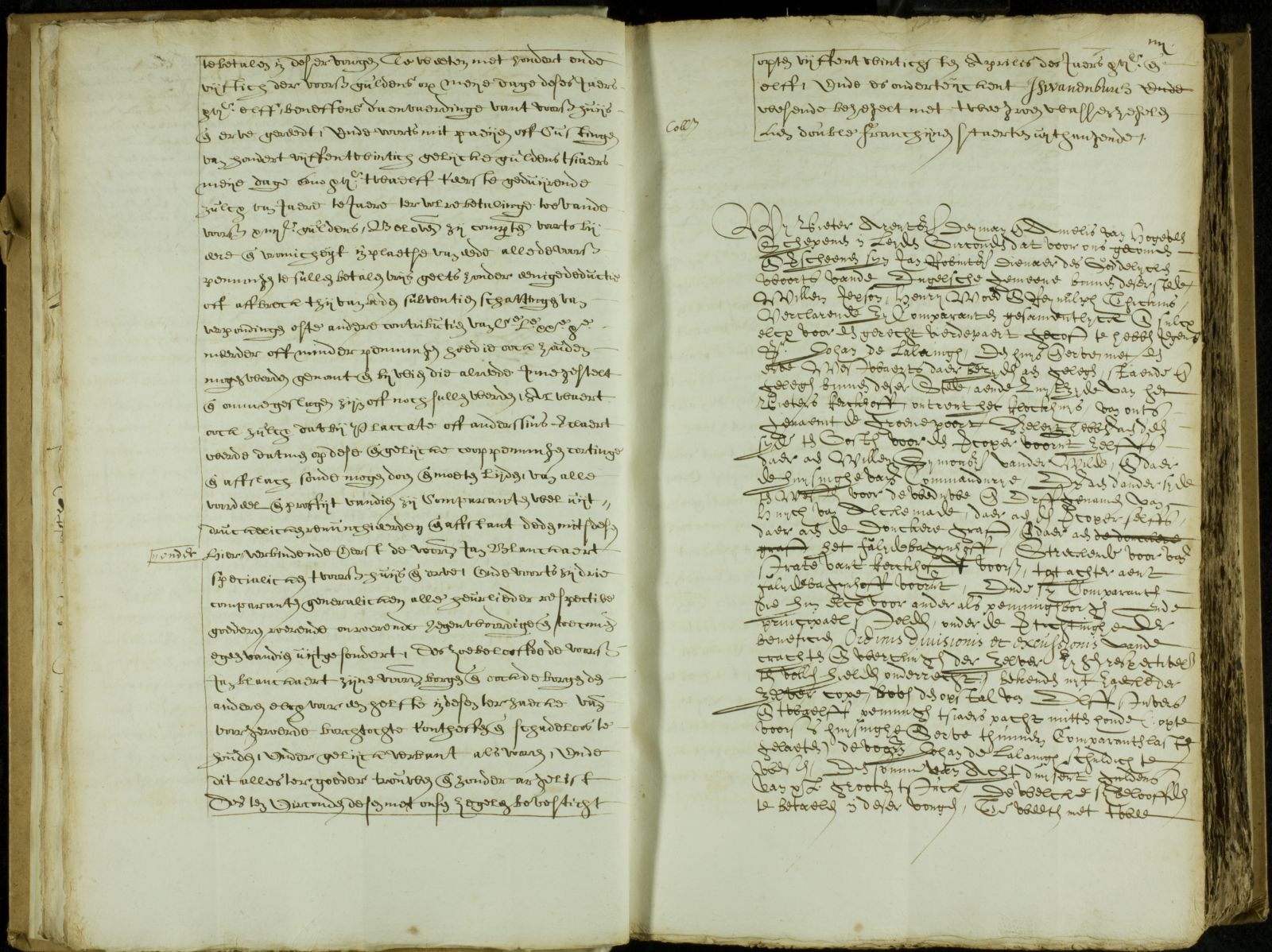
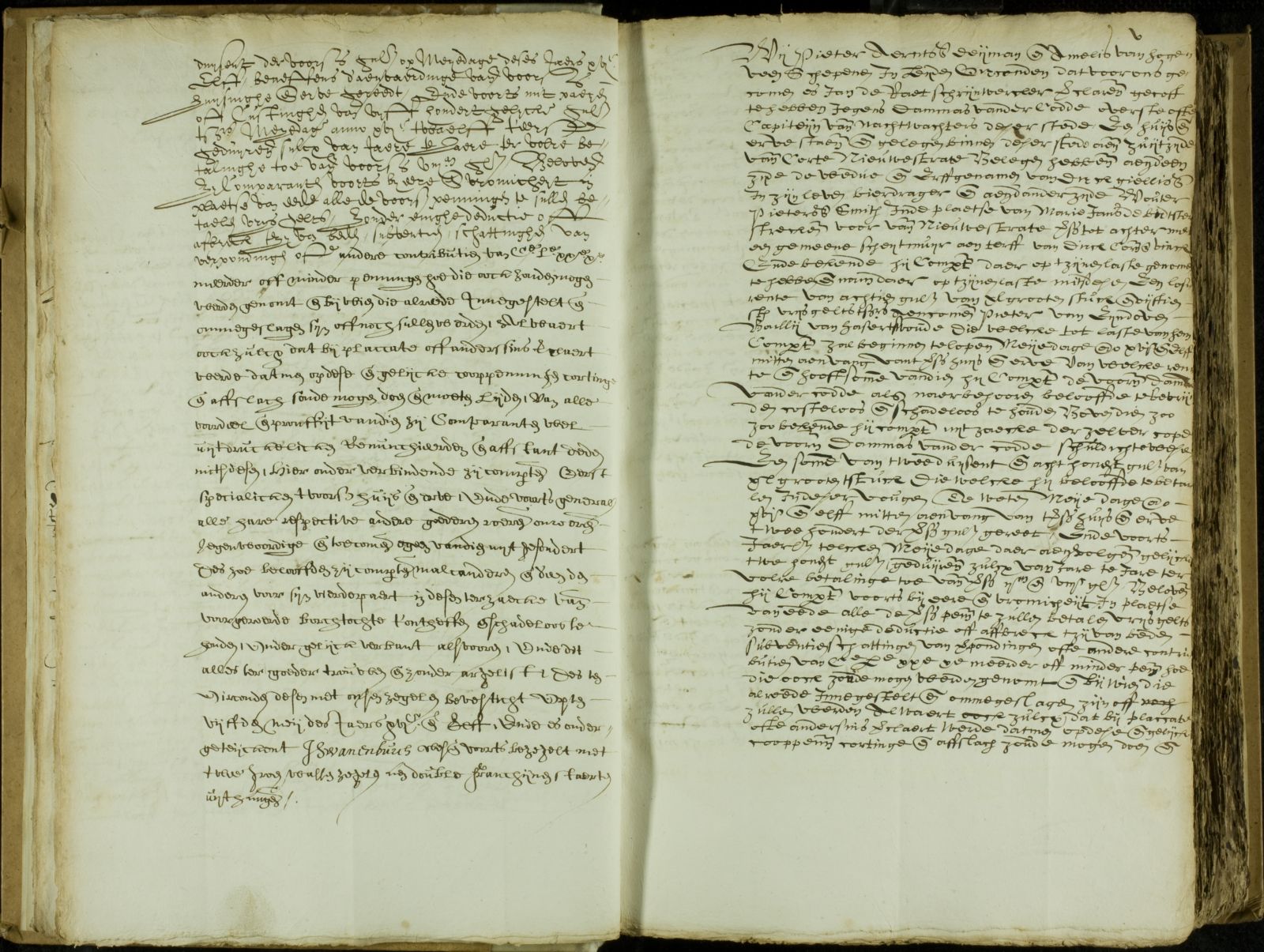
We, Pieter Arentszoon Deyman and Amelis van Hogeveen, aldermen in Leiden, certify that Jan Robintszoon, minister of the Divine Word to the English congregation in this city, Willem Jepsen, Henry Woed and Reynulph Thickins appeared before us. They declared that, jointly and each for one lawful quarter share, they had purchased from Seigneur Johan de Lalaing a house and yard with a yard lying to its west, standing within this city on the south side of the Pieterskerkhof near the Clockhuys, long known as De Groene Poort.
On the east it adjoins the seller himself, then Willem Symonszoon van der Wilde, and then the buildings of the Commandery. On the west it adjoins the widow and heirs of Huych van Alckemade, then the seller himself, then the Donkere Gracht, and then the Faliede Begijnhof. It extends from the street of the churchyard at the front to the Faliede Begijnhof at the rear.
The appearing buyers, each standing surety for the others and as principal debtors, renounced the legal benefits of division and prior execution, whose force and effect they declared they fully understood. On account of the purchase, in addition to the annual ground rent of eleven stuivers and twelve penningen with feudal dues left upon the house and yard, they acknowledged that they owed Johan de Lalaing 8,000 guilders of forty groten each.
They promised to pay 2,000 guilders in cash on May Day 1611, when they took possession of the house and yard, and thereafter 500 guilders on each May Day, beginning in 1612, from year to year until the full 8,000 guilders had been paid.
In place of an oath, they promised on their honour and good faith to pay all those sums free of deductions for levies, subsidies, assessments, property taxes or any other contributions, whether of the hundredth, fiftieth, twentieth or tenth penny, or any greater or lesser charge, whatever it might be called and whoever might impose it, whether already introduced or imposed later. Even if an ordinance or other rule should declare that a deduction might or must be made from such purchase money, they expressly renounced every benefit arising from it.
They specially pledged the house and yard, and generally all their other respective movable and immovable goods, present and future, none excepted. They also promised to indemnify one another for their respective quarter shares in the aforesaid suretyship, under the same pledge. All this was done in good faith and without fraud.
In witness, this deed was confirmed with our seals on 5 May 1611. It was signed J. Swanenburch and sealed with two green wax seals hanging from double parchment tags.
Translation by Radicae, The Leiden Connection, from the Dutch transcription supplied by Erfgoed Leiden.